
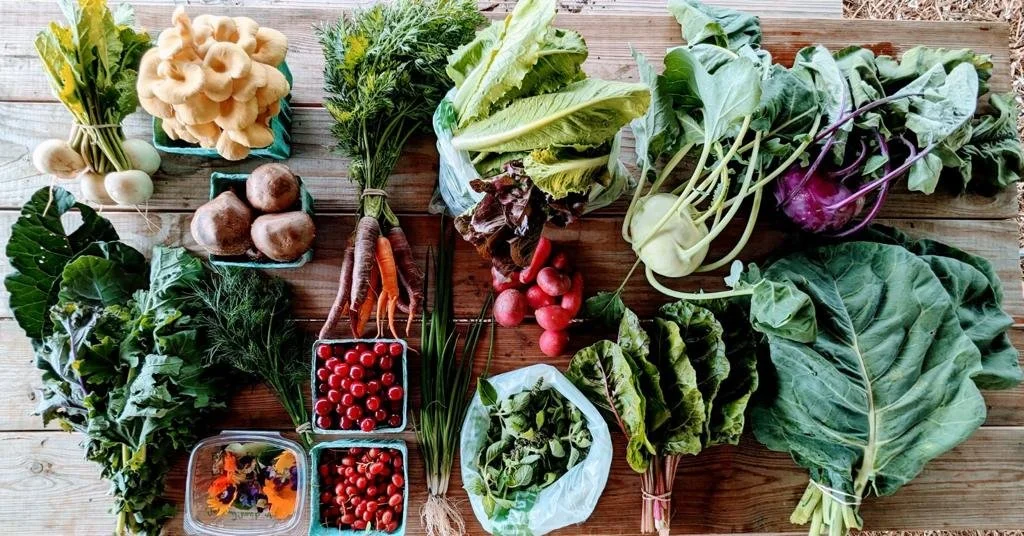
What is Real Food?
Real food truly nourishes producers, consumers, communities, and the earth.
It’s vital that we stand together around strong standards for sustainability and social justice through our definition of Real Food. Practically speaking, it is impossible to measure our progress if we are not all using the same standards and metrics. The Real Food Standards behind our work is elaborated upon below.
Through our partnership with Healthcare Without Harm and the Center for Good Food Purchasing, we are creating a unified movement of anchor institutions that shares purchasing standards across sectors in order to raise the bar and unlock our collective power. This collaboration has the potential to benefit eaters at 10,000 public and private institutions in 23 major cities.

Values of Real Food Standards

-
Vibrant and resilient regional economies are a forum for communities to regain power in decision-making within their local food system and the land that supports it. When buying power focuses within a regional economy, across production, processing, manufacturing and distribution, it creates shorter, more resilient supply chains and the potential for a circular (mutually reinforcing) economy.
-
Environmentally sustainable farms and food businesses build healthy ecosystems by improving soil health, increasing biodiversity, and reducing the carbon and water footprint of food production; while advancing public health and worker safety. Environmentally sustainable fishing operations protect habitat, ensure wild sustainable fish stocks, support traditional and local fishing economies; while advancing public health and worker safety. The promotion of climate-friendly diets and sustainably produced foods can reduce the environmental impact of our food system and incentivize further adoption of sustainable farming, fishing, ranching, and business practices.
-
Farm and food chain workers have the right to freedom of association and to bargain collectively, as well as the right to livable wages and healthy and safe working conditions. Food businesses that uphold and implement principles of workers' rights, cooperative ownership, democratic decision- making, and migrant, racial, economic and gender justice, help to ensure that food workers can live and work with dignity.
-
Animal welfare encompasses all aspects of animals' wellbeing and high animal welfare is achieved when animals' physical, mental, and behavioral needs are met throughout their lives. This can be understood through the five freedoms where animals are free: 1) From hunger and thirst, 2) From discomfort, 3) From pain, injury, and disease, 4) To express normal behavior, and 5) From fear and distress
Farms and ranches with high animal welfare practices ensure responsible care and stewardship of farmed animals that also create positive impacts for the health of surrounding communities and ecosystems.
-
Communities shaping their food environments is fundamental to ensuring that people have access to culturally relevant, nourishing food, which improves health and wellbeing, ensures food sovereignty and builds resilience to withstand and recover from economic and environmental disruptions.
Why aren’t colleges and universities already investing in Real Food?
Three multinational corporations (Aramark, Sodexo, and Compass Group) control 81% of higher education dining contracts and effectively act as gatekeepers to the $52 billion management industry. We call these corporations “the Big 3.”
The business model guiding these contracts are incentivized using “kickbacks,” or rebates that are paid to the Big 3 in exchange for buying large quantities of their product.
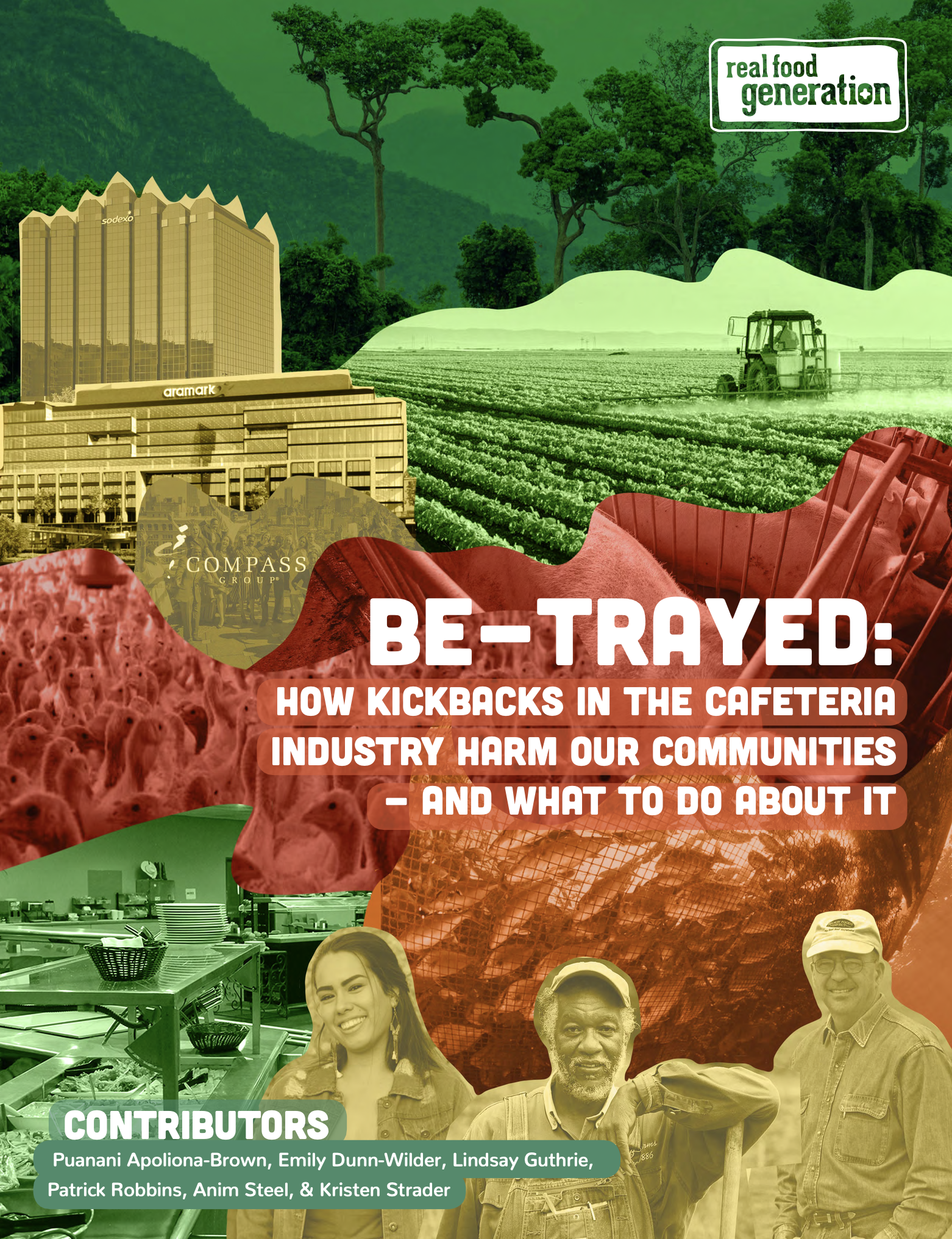
This pay-to-play system advantages food suppliers with the greatest ability to pay— large food and beverage manufacturers like Tyson & Cargill— while squeezing small and medium-size farms and food businesses out of the college market.
At Real Food Challenge, we challenge this system. We advocate for schools to adopt our Real Food Standards and use them to guide their food purchases, favoring contracts with local and historically-marginalized producers over corporations .